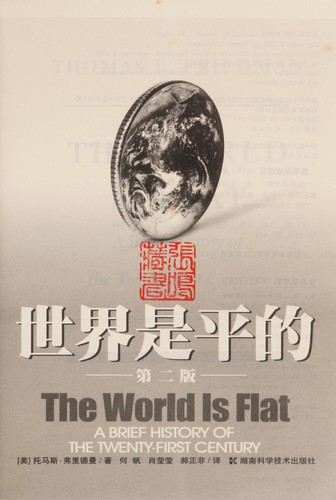
The World Is Flat -A Brief History OF THE TWENTY-FIRST CENTURY
About this book
When scholars write the history of the world twenty years from now, what will they say was the most crucial development at the dawn of the 21st century--the attacks of 9/11, or the convergence of technology and events that allowed India, China, and so many other countries to become part of the global supply chain for services and manufacturing, creating an explosion of wealth in the middle classes of the world's two biggest nations, and giving them a huge new stake in the success of globalization? And with this "flattening" of the globe, has the world gotten too small and too fast for human beings and their political systems to adjust in a stable manner? Friedman explains how the flattening of the world happened; what it means to countries, companies, communities, and individuals; and how governments and societies can, and must, adapt.
Subjects
- 303.48/33
- 89.70 international relations: general
- aspects économiques
- aspect social
- aspects sociaux
- class of 1953
- diffusion
- diffusion des innovations
- diffusion of innovation
- diffusion of innovations
- economic aspects
- economic aspects of globalization
- economics
- economische aspecten
- futurologie
- géopolitique
- globalisierung
- globalização (aspectos socioeconômicos)
- globalization
- globalization--economic aspects
- globalization--social aspects
- hm 846 f734 2007
- hm846 .f74 2007
- information dissemination
- information society
- innovations
- inovações tecnológicas
- internationale orde
- internationale politiek
- internationalisatie
- internet
- large type books
- memorial bookplates
- mondialisation
- mudança social (motivos)
- new economy
- pays développés
- pays en développement
- politics
- politieke aspecten
- sociaal-economische aspecten
- social aspects
- social aspects of globalization
- sociedade da informação
- société de l'information
- société informatisée
- technologies de l'information et de la communication
- whitman college
- world economics
- zukunft