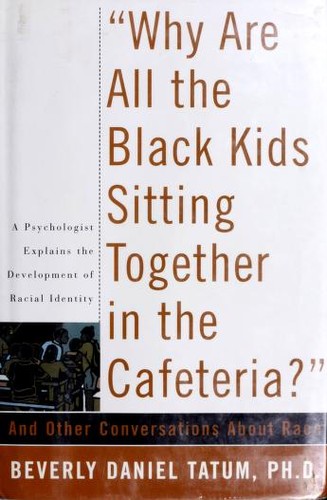
"Why are all the Black kids sitting together in the cafeteria?" and other conversations about race
About this book
There is a moment when every child leaves color-blindness behind & enters the world of race consciousness. At that moment, there are two roads parents, educators, & therapists can take: they can follow the status quo, internalizing racial expectations, & become-consciously or unconsciously-part of the problem. Or, they can question stereotypes, &, actively work against racism to become part of the solution. This book provides the tools we all need to become part of the solution. Beginning with racial segregation in an integrated school situation, this book explores race relations & the development of racial identity from many different viewpoints.
Walk into any racially mixed high school and you will see black youth seated together in the cafeteria. Of course, it's not just the black kids sitting together-the white, Latino, Asian Pacific, and, in some regions, American Indian youth are clustered in their own groups, too. The same phenomenon can be observed in college dining halls, faculty lounges, and corporate cafeterias. What is going on here? Is this self-segregation a problem we should try to fix, or a coping strategy we should support? How can we get past our reluctance to talk about racial issues to even discuss it? And what about all the other questions we and our children have about race? Beverly Daniel Tatum, a renowned authority on the psychology of racism, asserts that we do not know how to talk about our racial differences: Whites are afraid of using the wrong words and being perceived as "racist" while parents of color are afraid of exposing their children to painful racial realities too soon. Using real-life examples and the latest research, Tatum presents strong evidence that straight talk about our racial identities-whatever they may be-is essential if we are serious about facilitating communication across racial and ethnic divides. We have waited far too long to begin our conversations about race. This remarkable book, infused with great wisdom and humanity, has already helped hundreds of thousands of readers figure out where to start. -- Publisher.
Subjects
- 305.800973
- adolescent
- african american children
- african american children--psychology
- african americans
- african americans, psychology
- african americans--psychology
- african americans, race identity
- african americans--race identity
- african american studies
- african american youth
- african american youth--psychology
- afro-americans
- communication
- communication and culture
- communication and culture--united states
- communication--social aspects
- communication--social aspects--united states
- discrimination & race relations
- e185.625 .t38 2003
- e185.625 .t38 2017
- ethnic studies
- european continental ancestry group--psychology
- intercultural communication
- intercultural communication--united states
- minority studies
- new york times bestseller
- nyt:combined-print-and-e-book-nonfiction=2020-06-21
- psychology
- psychology, adolescent
- race awareness
- race awareness in adolescence
- race awareness in adolescence--united states
- race awareness in children
- race identity
- race relations
- soc001000
- social aspects
- social identification
- social science
- social science--ethnic studies--african american studies
- united states, race relations
- white people
- whites
- whites--psychology
- whites--race identity
- whites--race identity--united states
- whites--united states--psychology
- whites--united states--race identity
- ws 462 t221w 2003