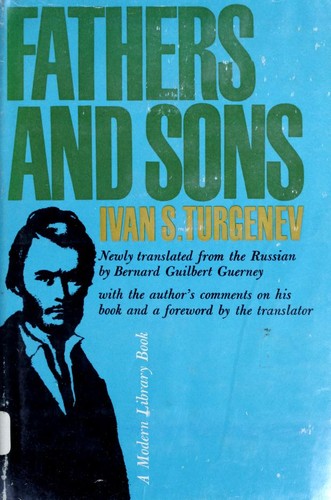
Отцы и дети
About this book
Fathers and Sons takes the conflict between generations as its subject. The novel's central characters, Yevgeny Bazarov and his disciple and fellow student, Arkady Kirsanov, are self-proclaimed Nihilists: repudiators of all the received truths of art, religion, and politics-all claims to truth, in fact, except those verifiable by scientific experiment. Turgenev thrusts his snarling young radicals into the venerable world of fathers when Bazarov accompanies Arkady to the Kirsanov country estate. The visit inevitably turns sour, and Arkady's Uncle Pavel and Bazarov find themselves at one another's metaphysical throats. Their disagreements escalate into a dangerous confrontation.When Fathers and Sons was published in 1862, it enveloped its author in a storm of controversy. Those on the political right saw it as a dangerous glorification of nihilism, whereas those on the political left believed it to be a vicious caricature of the progressives of the younger generation. Today, the novel continues to engage us with its vital characters and subtle handling of universal themes.
Subjects
- classics
- conditions sociales
- conflict of generations
- continental european fiction (fictional works by one author)
- correspondence
- criticism and interpretation
- educational measurement
- english
- fathers and sons
- fathers and sons, fiction
- fiction
- fictional works publication type
- fiction, family life
- fiction, general
- fiction, historical, general
- literature
- manners and customs
- medical colleges
- medical education
- medical schools
- medicine
- mœurs et coutumes
- nihilism (philosophy)
- open_syllabus_project
- pères et fils
- readers
- romans, nouvelles
- russian fiction
- russian language
- russian language materials
- short stories, english
- slavic philology
- social conditions
- social life and customs
- soviet union, fiction
- study and teaching
- textbooks for foreign speakers
- texts
- translations into english