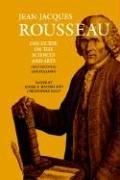
Jean-Jacques Rousseau
Jean-Jacques Rousseau was a major Genevois philosopher, writer, and composer of 18th-century Romanticism. His political philosophy influenced the French Revolution and the development of modern political, sociological and educational thought.
His novel, Emile: or, On Education, which he considered his most important work, is a seminal treatise on the education of the whole person for citizenship. His sentimental novel, Julie, ou la nouvelle Héloïse, was of great importance to the development of pre-Romanticism and romanticism in fiction. Rousseau's autobiographical writings: his Confessions, which initiated the modern autobiography, and his Reveries of a Solitary Walker were among the pre-eminent examples of the late 18th-century movement known as the "Age of Sensibility", featuring an increasing focus on subjectivity and introspection that has characterized the modern age.
Rousseau also made important contributions to music as a theorist. During the period of the French Revolution, Rousseau was the most popular of the philosophers among members of the Jacobin Club. He was interred as a national hero in the Panthéon in Paris, in 1794, 16 years after his death.1
Books
- Du contrat social 1762
- Les confessions 1856
- Emile or Education 1762
- The Social Contract and Discourses 1913
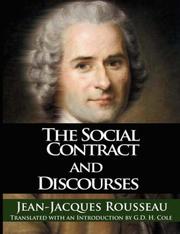
- The Social Contract 2006
- Basic political writings 1987
- Discours sur l'origine et les fondements de l'inégalité parmi les hommes 1922
- Rêveries du promeneur solitaire 1964
- Discours sur les sciences et les arts 1946
- Discourse on the sciences and arts (first discourse) ; and, Polemics 1992