Dr. Seuss
Theodor Seuss Geisel was born on in Springfield, Massachusetts to German-American parents. He attended public schools and then went to Dartmouth College, where he became editor of the Dartmouth Jack-O-Lantern. When he was barred from all extracurricular activities, he continued to write for the paper using the pseudonym "Seuss." After he graduated he became a contributor to the magazine The Judge, and began to sign his work as "Dr. Seuss." He attended Lincoln College, Oxford to earn a D.Phil in literature, but married Helen Palmer in 1927 and returned to the United States without earning the degree. He published humorous articles and illustrations in The Judge, The Saturday Evening Post, Life, Vanity Fair, and Liberty and supported himself and his wife through the Great Depression with commercial illustrations for General Electric, NBC, Standard Oil, and many other companies. He also wrote and drew a short-lived comic strip called Hejji in 1935. In 1937, returning from an ocean voyage to Europe, he wrote his first book, And to Think That I Saw It on Mulberry Street. When World War II began, he began to create political cartoons and became an editorial cartoonist for the left-wing New York City newspaper, PM. His political cartoons were later published in Dr. Seuss Goes to War. In 1942, he began producing propaganda posters for the Treasury Department and the War Production Board. In 1943, he joined the Animation Department of the First Motion Picture Unit of the U.S. Army Air Forces, where he wrote propaganda and training films. After the war, he and his wife moved to La Jolla, California. He returning to writing and illustrating children's books. In 1954, Life magazine published an article on the dullness of children's books, and Geisel was inspired to write The Cat in the Hat. In 1967, his wife Helen committed suicide. He married Audrey Stone Dimond in 1968. Geisel died in La Jolla, California in 1991.
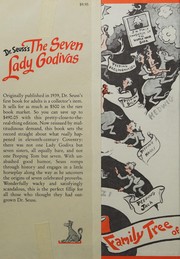
Over the course of his career, Geisel wrote over 60 children's books, either under the pseudonym "Dr. Seuss" for the ones he wrote and illustrated himself, "Theo. LeSieg" for books he wrote but others illustrated, or "Rosetta Stone" for Because a Little Bug Went Ka-choo (1975). He also wrote two books for adults: The Seven Lady Godivas; Oh, The Places You'll Go!; and You're Only Old Once.
Books
- The Eye Book 2001
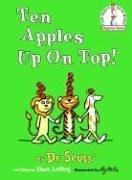
- Ten Apples Up On Top! (Beginner Books(R)) 1961
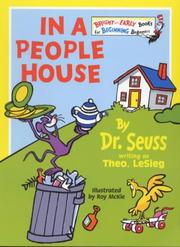
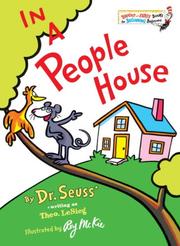
- In a People House 1972
- Dr. Suess's ABC
- Hunches in bunches 1982
- Maybe you should fly a jet! Maybe you should be a vet! 1980
- My book about me, by me myself 1969
- Robert the Rose Horse (Beginner Books(R)) 1962
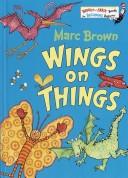
- Wings on Things 1982
- The Bippolo Seed and other lost stories 2010
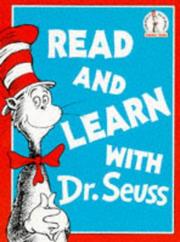
- Read and Learn with Dr.Seuss 1996
- The Secret Art of Dr. Seuss 1995
- My Book about Me 1983
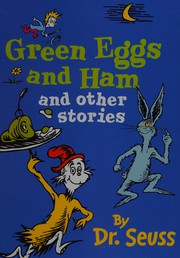
- Green Eggs and Ham and other stories 2001
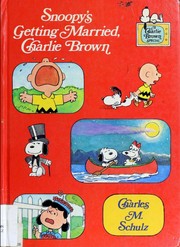
- Snoopy's getting married, Charlie Brown 1985
- Seven Lady Godivas 1987
- In A People House (Book Club Edition) 1972
- Dr. Seuss's Mr. Brown can moo! Can you? 2009